











Culper Research disclosed a short position in ether and ETH-linked securities on Thursday, arguing that Ethereum’s post-upgrade economics have deteriorated enough to put sustained downside pressure on the token. The firm pointed directly at Ethereum’s December 2025 Fusaka upgrade, and at Vitalik Buterin’s recent sales, as evidence that “ETH is going lower.”
“NEW: We are short Ether ETH, and ETH-linked securities, incl. BMNR,” Culper wrote on X. “We think ETH tokenomics are impaired following the December 2025 Fusaka upgrade. Vitalik knows it and is selling, while ETH’s most ardent bull, Tom Lee, is throwing good money after bad.”
Why Culper Is Shorting Ethereum
Culper’s core claim is that Fusaka’s L1 scaling changes altered Ethereum’s demand-fee dynamic more dramatically than expected. The firm pointed to a gas limit increase “45 to 60M” that it said was intended to scale Ethereum’s base layer, alongside estimates that “Vitalik and PTG” believed fees would drop 10% to 30%. Culper contends the realized outcome was far more severe: “In reality, gas fees fell ~90%,” it wrote, adding that Ethereum’s leadership and validators “miscalculated L1 demand elasticity by 3-9x based on outdated math (pre-EIP-1559 and pre-L2s).”
That fee compression matters, Culper argues, because it ripples into validator economics and staking incentives. “Further, the gas-limit increase killed $ETH validators, who are now seeing 40-50% lower tips per gas,” Culper wrote, claiming that lower yields reduce demand for staking and “high-value activity,” undermining the institutional adoption narrative. “The flywheel is now running in reverse.”
The thread frames Tom Lee and BMNR as a prominent counterweight in the ETH bull camp, then attempts to dismantle his post-upgrade read-through. Culper said Lee has defended ether by claiming: “ETH is not in a death spiral because utility is going up.” According to Culper, Lee cited spikes in active addresses and transaction counts after Fusaka as evidence of “strengthening fundamentals” and institutional adoption.
Culper’s rebuttal is blunt and largely definitional: “By Lee’s own logic, if ETH activity does NOT reflect increased utility and strengthening fundamentals, then $ETH would be in a death spiral,” it wrote. “Our research says this is exactly what’s happening.”
To explain the activity surge, Culper said its analysis of on-chain data from January 2025 through February 2026 suggests much of the growth was not organic usage, but a wave of low-value address poisoning and wallet dusting enabled by cheaper blockspace. “Post-Fusaka: 95% of growth in new wallets is explained by newly-created ‘dusting’ wallets,” Culper wrote, adding that poisoning attacks have “more than 3x’ed,” that poisoning explains “>50% of $ETH transaction growth,” and that it now constitutes “22.5% of all ETH transactions.”
Culper said it validated the phenomenon firsthand, claiming it set up two new wallets, transferred between them, and was targeted by poisoning attacks “within 5 minutes,” while asserting that poisoning losses are “already pacing >8x higher than pre-Fusaka.”
Vitalik Is Selling
The firm also tried to tie its tokenomics thesis to Buterin’s recent sales activity, portraying it as informed selling rather than routine treasury management.
“This is why, we think, Vitalik is selling ETH hand over fist. On January 30, Vitalik pre-announced he’d sell 16,384 ETH to fund the Foundation’s ‘austerity period.’ Since then, he’s sold over 19,300 ETH and counting,” Culper wrote. “He knows what Tom Lee doesn’t: ETH tokenomics are broken.”
Culper closed by broadening the bear case into a competition story, claiming ether is losing share to Solana and to Ethereum’s own L2s, and likening ETH’s current position to incumbents that led early eras before being displaced.
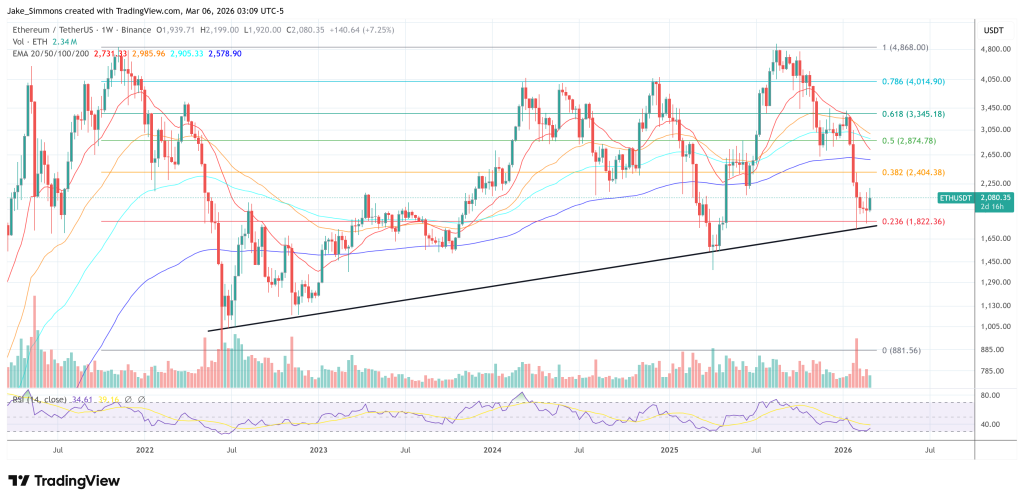
At press time, ETH traded at $2,080.






+ There are no comments
Add yours